Wednesday, February 19, 2014

Patzcuaro, La Casa de los Onces Patios


La Casas de los Onces Patios is a former Dominican convent that has been converted into a 2 story showcase for regional crafts. Many of the patios are linked by sculpted arches that lead to a variety of shops and courtyards.


We could spend days wandering around and looking in all of the shops. One of our favorite things is watching the artists working with black lacquerware which is often trimmed with gold. They paint beautiful jewelry, large and small decorative plates, gourds, boxes and many other items. The detail is incredible and
the results are striking.


When I think of Patzcuaro and crafts I always think of the textiles. Most of them are hand woven, some on large traditional looms. Beats me how they do it.


There are many shops selling napkins, tablecloths, placemats and so on. This was one of my favorites.


 I loved the stuff in here and purchased a queen size bedspread similar to the one in this photo. At $45 there was no way I could pass it up.


The women in this area do exquisite embroidery. I read that girls begin embroidery classes at the age of 5. So many gorgeous blouses and other clothing as well as pillows of all sizes and shapes.


Monday, February 17, 2014

Patzcuaro, Plaza Vasco de Quiroga

Patzcuaro is a 'Pueblo Magico' and has been named one of the 100 Historic World Treasure Cities by the United Nations. It was an important religious and ceremonial site for the Purepecha, or Tarascan people during pre-Hispanic times. Much of its indigenous charm is evident today. 


We can spend days just wandering around town and seem to find something interesting around every corner. Plaza Vasco de Quiroga, above, is named for Michoacan's first bishop who temporarily turned Patzcuaro into the civic, religious, and cultural seat of the state. He is credited with implementing a plan where each village around Lake Patzcuaro would be assigned a different skill. He believed that if village residents would trade with each other there would be peace among the people. Their descendants continue this tradition today with different villages known for their different skills.

The plaza is considered to be one of the most beautiful squares in America. It differs from other Mexican plazas because it's not surrounded by religious buildings but by majestic white and ocher colored buildings. There are stores, restaurants, and shops under the portales (arches).


This stone building is a bit unusual because it's not made of the customary adobe brick.


There are some beautiful hotels around the square. We were pretty impressed by this sign painter hanging off his shaky scaffold to repaint the hotel's name, apparently free-handed.


The plaza is a central social area for the townspeople. Day and night there was music, either from speakers situated around the square or from a variety of musicians. In the evenings we saw people walking their exercise laps while others strolled along, chatting with friends while kids rode their bikes and played. It's a lovely place to spend some time.


On the weekends we saw the Danzas de Viejitos (dance of the little old men). It is a traditional Michoacan dance where the dancers wear the masks of old people along with their campesino clothing. The dance begins with the aching and hunched over old men who eventually begin vigorous dancing. The dancers wear wooden sandals that have kind of a hinge and it sounds a lot like tap dancing once they get going. 


This young man appears to be a viejito-in-training.


This wasn't our first trip to Patzcuaro and hopefully there will be more to come. Previous blogs about Patzcuaro can be found at

http://www.briansue2.blogspot.mx/2012_02_01_archive.html

http://www.briansue2.blogspot.mx/2010_02_01_archive.h


Saturday, February 8, 2014

Patzcuaro, Rancho la Mesa

Entrance to the restaurant
There are three RV parks in Patzcuaro, one of our very favorite towns. Two of the RV parks have easier access to town than Rancho la Mesa but we love staying here. Public transportation isn't as reliable up here as at the other RV parks but since we have a car that isn't a problem for us. It would be a consideration for other RVers.
Rancho la Mesa is in a beautiful setting with well kept grounds, a nice restaurant, spacious rooms, and a decent place for RV parking with full hook-ups. The rooms have private patios and gardens.


The RV spots have fabulous views of the town, Lake Patzcuaro, and the island of Janitzio. Often in the mornings the lake is shrouded by fog with the island peeking above. It's quite a scene. At this time we're the only RV enjoying the view.


A closer look at the view.


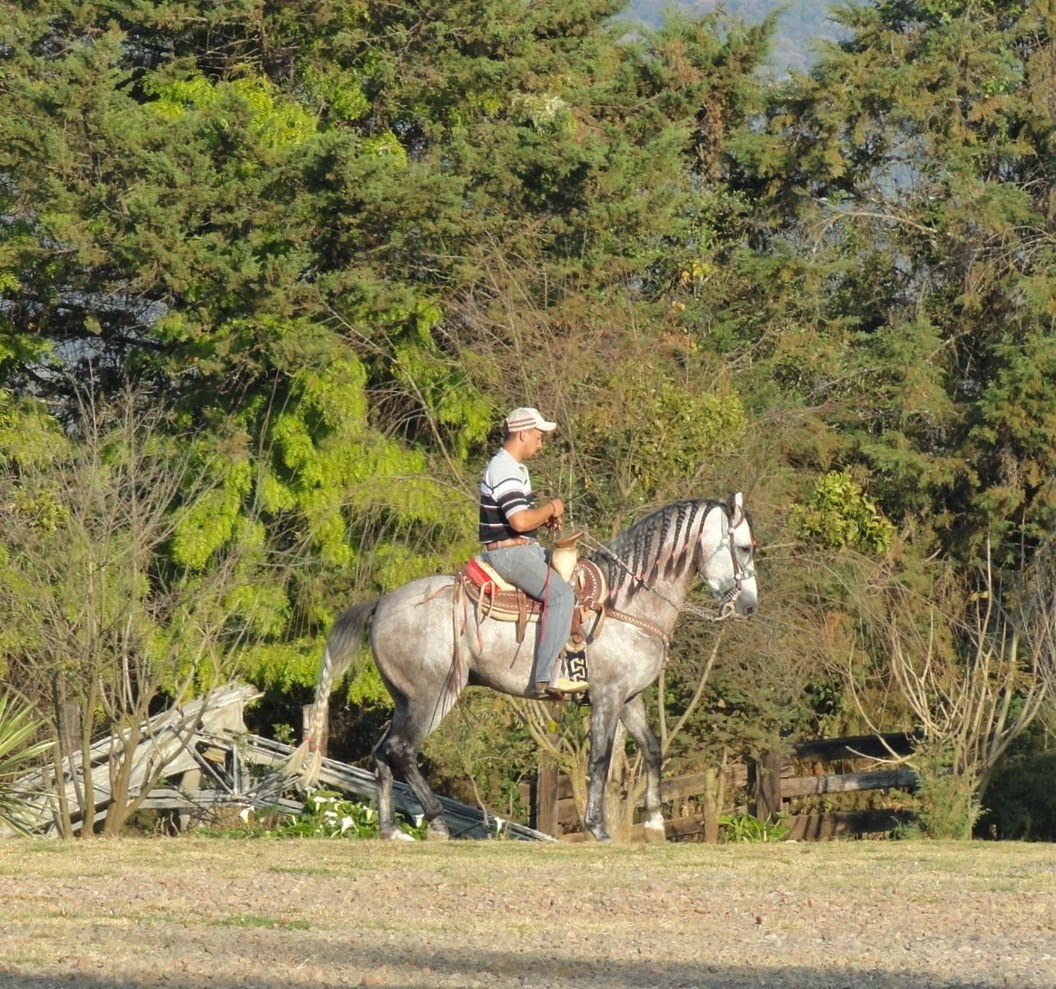
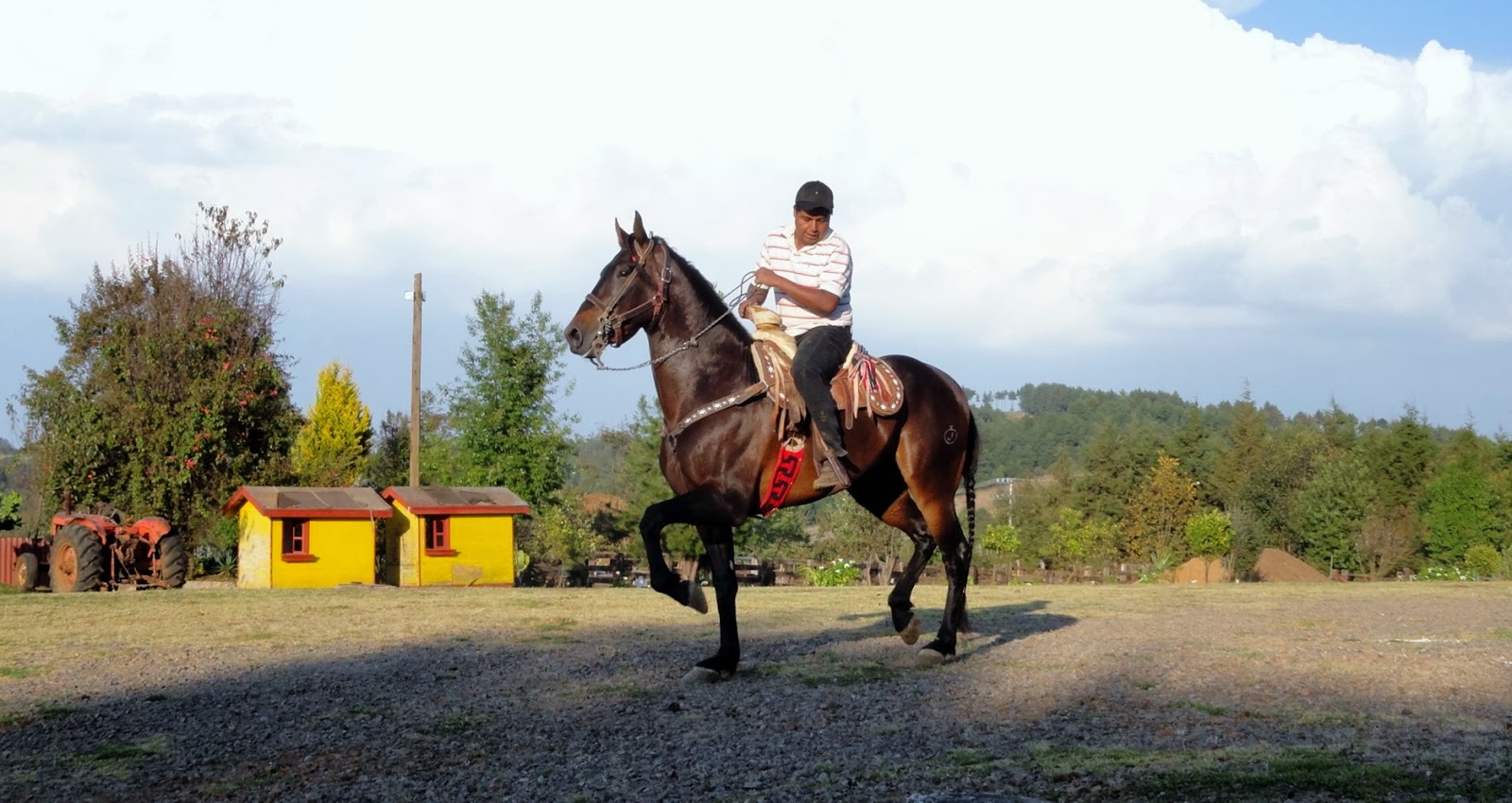
Another thing that's so fun about Rancho la Mesa is that it's actually a ranch. On the day we arrived we were treated to a horse show. As far as we can tell, there are at least 5 adult horses and a young horse here. The caballeros were putting the horses through their paces right in front of our Bus.


This beautiful grey horse (sorry, don't know the name) was quite the dancer. Just gorgeous.


This one danced and pranced as well.


It was quite a sight and what a wonderful experience. Once again, we never know what's going to happen next.
This morning we walked over to the stables where we got some more pictures. The braided mane and forelock on the grey can be seen better close up.


The horses were all gentle and enjoyed the attention we gave them. This pony, also with braids, was dancing yesterday but I didn't get the camera out in time to get a picture, just had the privilege of watching him.


In addition to horses the ranch has 14 ostriches. They're fun to watch and make a really unusual sound which is hard to describe. Evidently they end up being served in the restaurant, sorry to say.


There are a multitude of ducks and geese, also some sheep that we found grazing in front of the Bus.


Tilly made friends with a cute little burro. The local dogs have been very friendly too.


Our journey from Hacienda Contreras in Valle de Juarez was 140 miles, but took us 5 1/2 hours. We had done the trip before so we expected it to take that long. There are some winding roads and little villages with lots of topes (sleeping policemen) so it's slow going. However, it's a beautiful drive and we totally enjoyed it.

Our route


And where we are in Mexico


For our RV friends who might be considering staying at Rancho la Mesa, here's a map of the actual road and route. The thin blue line is not on GPS, but exists and is the way in. Let us know if you need further details.


Monday, January 27, 2014

Melaque


After being up in the highlands since the holidays we decided we would spend some time on the coast. The nearest beach town from Jocotepec with RV parks is Melaque. The town has two parts, San Patricio Melaque (after St. Patrick as once many Irish settled here and St. Patricks day is still a big celebration) and Obregon, but it all runs together as one town commonly referred to as Melaque. This stretch of coast is referred to as Costalegre, the happy or bright coast.

Melaque is 200 miles from Jocotepec. Its about 35 miles north of the busy port city of Manzanillo and 140 miles south of Puerta Vallarta.


We are staying at Villa Xochipilli, which is a bed and breakfast that also has 4 RV spots. We entered through the double door gate to the left of the Jeep in the picture at the top of the page. We're the only RV at the moment so have the place to ourselves. It's about a 4 block walk to the beach from here. We are completely fenced and gated so Tilly can roam as she chooses - but she says it is too hot to stay out very long.


The B&B side of the villa has beautiful grounds and a nice pool.


We're located on a lagoon that has a walkway right outside of our back door. Nice place for a walk but we have to beware of the crocodiles in the lagoon. Tilly is in front of a sign that warns us of the crocodillos and shows one of them with a dog in its mouth. You can see how afraid Tilly is by the way her ears are laid back.


I'm sure she doesn't know the difference but it kind of creeps me out and I can't stop looking around for them while we're walking. It would probably be pretty rare to see one but you never know.

We've been to Melaque and the neighboring town of Barra de Navidad once before. I wrote about the number of coconut and banana trees in a previous blog and am still amazed by how many there are. Miles and miles of coconut palms with banana trees planted in between them. No wasted space.


There are also ladrillo refactarios (what we call brick factories) in this area as there are in many areas of Mexico. The bricks are shaped by hand from clay, then stacked in a very specific way with firewood stuck in among the bricks to be fired. The entire stack is then sealed with mud on the outside to turn the whole thing into a large kiln.  The fuel for the fire in this area is coconut husks of course. We have been told that the most highly paid worker in a ladrillo refactario is the one who knows how to stack the bricks and monitor the temperature of the fire. This is one place we saw nearby where you can see the bricks being formed on the left, and being fired on the right.


Near the ladrillo were huge piles of coconut husks which we assume were used for fuel.


There was an Art Walk in the town of La Manzanilla (not to be confused with Manzanillo), on the beach about 10 miles north of us. We checked it out, had lunch, and walked around town a bit. I was particularly impressed with the gazebo in their jardin. The roof was a giant shell (man-made), shells lined the overhang and there were ocean related statues on the posts. Very nice.


We'll do a bit more exploring before we head back to highlands.

Jocotepec Patronales


This is the second time we've been able to enjoy the Fiesta Patronales in Jocotepec. The Patronales is a two week celebration dedicated to the first patron saint of Jocotepec, Nuestro Senor del Monte, or Lord of the Mountain. There's a desfiles (parade) or peregrinación (pilgrimage) every day or night complete with marching bands, floats, dancers and fireworks. The streets are blocked off so that vendors can set up their numerous stands selling a variety of goods and food. We attended one of the parades at night but my pictures didn't turn out. However, we were in town as they were getting ready for the parade and I got some photos of the kids getting ready.


They carried these huge headdresses that must have weighed more than they did. It looked like they were balanced on their shoulders and they held onto ropes attached somehow to the headdress. Their robes looked like they were made from some type of metal. Very elaborate and I have no idea how they managed to march without dropping everything, but they did.

Each parade is sponsored by a different group or groups. One day it may be all the mechanics, another day all the grocers, and so on. The length and elaborateness of the parade depends on the wealth of the group. The parade on the last day is sponsored by people from Jocotepec who have moved to the United States. Since it's assumed that they have the most money it's expected that their parade will be the most elaborate.


Each day begins with fireworks that start around 5:30. The tower in the picture above is called a castillo, or castle.  It's loaded up with fireworks and they're all set off pretty much at the same time. There were guys climbing all over it attaching the fireworks when we walked by. It's a dangerous display and it's hard to believe there aren't more injuries since there doesn't seem to be any regulation. Fun to watch, but only from a distance. Each parade is also preceded by fireworks. There's a guy at the head of the parade who carries skyrockets in his hand and sets them off to announce the parade is coming. Pretty crazy.


One of the parades we really enjoyed was a Cabalgata (cavalcade). It began with a parade of hundreds of horses through town to the old bull ring where there was a Charro (competition/demonstration). There were some beautiful horses and their riders enjoyed showing off their skills by having their horses dance.


They guy on the right in this picture couldn't seem to get off his cell phone.


Many of the riders were drinking beer or tequila out of cups. There was even a pick-up truck at the end of the parade with girls mixing drinks for the riders. The guy in the middle of the three men in the back of the picture below didn't bother with any of that - he just drank straight from the bottle and passed it on to his amigos.


We enjoyed the parades and our time wandering around town looking at all the vendors. This young lady was so adorable I just had to get her picture, with her mom's permission of course.


In spite of the fireworks waking us up so early every morning we were happy we went back for the Patronales Fiesta. I'm sure it won't be our last.