When we were getting some upgrades at a service facility in Vancouver, Washington we met Randy Coleman, a fellow RVer and owner of Coleman Vineyards. He lives in McMinnville and suggested we stop there on our way to the coast. He invited us to visit his winery and taste some wine so of course we did. We had a great time touring his winery as well as some others and sipping some great pinot noirs.
We also toured the Evergreen Aviation Museum which was a short walk from our RV park. The museum is an amazing facility. The main attraction is probably Howard Hughes's Spruce Goose which anchors the central aviation building. It's actually the real Spruce Goose, not a replica. It has the largest wingspan of any aircraft in history and is the largest 'flying boat' ever built.
There is no way to capture the immensity of this aircraft with my camera, but it's possible to get some idea of the scale by looking at the people waiting to go inside the aircraft. The story of the Spruce Goose is quite interesting and has been the subject of several documentaries. To learn more about both the Spruce Goose and the Evergreen Air Museum, click on the following links
Evergreen Air Museum
Spruce Goose
The Evergreen Museum is a complex of several buildings and I am really fascinated by the one under construction. It's going to be a waterpark with a real 747 on the roof. Evidently it will be incorporated into some kind of water slide. Crazy.
The Oregon coast is rugged and spectacular. We stayed in Coos Bay and ventured out from there to explore. The mornings were foggy as expected but we had some sun as well. Tilly took off running when we got to the beach - always a treat for our beach doggie.
Our final destination in Oregon was Crater Lake National Park. Crater Lake combines a deep, pure lake which is unbelievably blue in color with sheer surrounding cliffs that are almost two thousand feet high. It is the deepest lake in the United States at 1,943 feet and is the seventh deepest lake in the world. It is said to be the purest body of water on earth. We were both pretty amazed by the lake and its setting. Very unique.
Saturday, September 18, 2010
Saturday, August 21, 2010
Washington
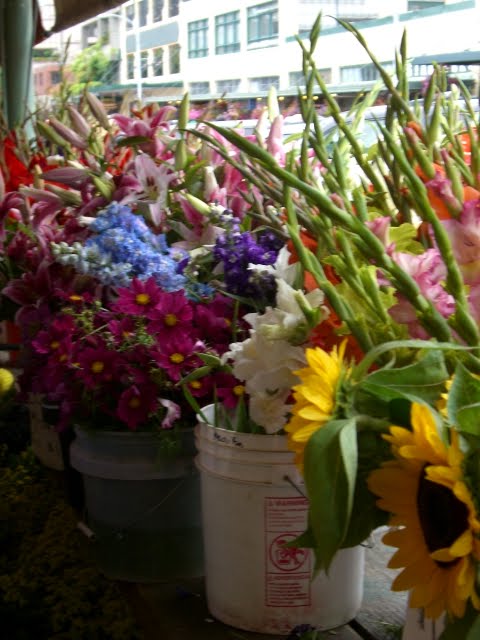
We all took the ferry into Seattle one day where we walked around the waterfront and Pike Place Market. We watched the vendors throw fish to waiting customers, listened to some street musicians, and reveled in the abundance of flowers and fresh produce. This wasn't our first visit, and as in many places we've been lately we were amazed at the number of people we saw.
After our trek around the market we had lunch at one of our favorite restaurants on the pier, Elliott's.
One of the must-see places on our list is the Olympic Peninsula and that's where we headed next. Our first stop was in Port Townsend, which is one of three named Victorian Seaports in the US and the only one on the west coast. There is a small RV park just above the marina and we were able to get a spot overlooking the Straits of Juan de Fuca. It was interesting to watch the boats and kayakers come and go, and we had a nice beach to walk Tilly on right out front.
A few months ago we joined a new club called Harvest Hosts, which is modeled after similar programs in Europe. The idea is that RVers in self-contained units can stay a night or two at various farms and wineries for the cost of the membership, which is nominal. It is a situation which benefits both the visitor and host. The visitor gets a free place to stay and the host gets some business and publicity.
We used our membership for the first time to stay at the Purple Haze Lavender Farm in Sequim ('Skwim' rhymes with swim) and were very impressed. The people who own and work at the farm were very pleasant and accomodating and we loved learning all about lavender - how it's grown, harvested, processed and made into a variety of products. Much of the lavender had been harvested but the fields were impressive. We were invited to stay for two nights so we were also able to spend time in Olympic National Park as well. We drove up Hurricane Ridge and had some great views of the Olympic Range, including Mt. Olympus, as well as a clear view of the Straits and Vancouver Island.
Our last stop on the Olympic Peninsula was in the town of Forks, home of the Twilight book and movies. Everything in the town is pretty well geared towards capitalizing on the Twilight theme, which is a bit weird if you're not fans. However, it was a good place to stay in order to see the sights in this area. We went to La Push and Rialto Beach, which was beautiful. There are huge logs washed up on the beach - many as large as 6 feet or more in diameter.
The trees in this area are huge and form incredible canopies over the roads.
The northwestern most point of the continental United States is at Cape Flattery near Neah Bay on the tip of the Olympic Peninsula. It is part of the Makah Indian Nation. We toured Neah Bay's Makah Museum, which also serves as an archeological research center and showcases artifacts from the Makah's 3,800-year history. It is associated with the Smithsonian and is a world class facility. After viewing the exhibits and walking through a life size long house we headed for Cape Flattery.
The Cape looks out over Tatoosh Island and huge sea stacks rising out of the ocean. The hiking trail we took afforded breathtaking views of some of the Peninsula's most spectacular scenery.
Our last day was spent in another part Olympic National Park which is accessed from the west. We drove through the Hoh Rainforest and then out to Ruby Beach on the coast. It was sunny in the rainforest which was unusual considering it receives 12 to 14 feet of rain per year. The trees are draped in mosses and looked a bit like something out of a fairy tale. We left the sun behind when we neared the coast and encountered fog, which enhanced the fairy tale quality of the day's adventures.
The Olympic Peninsula offers a surprisingly wide variety of scenery and ecosystems in a fairly small area. Another great exploration!
Sunday, August 1, 2010
Canada
Banff National Park
Banff
We saw a lot of wildlife, including this baby bighorn sheep peeking out from the bushes - too cute!
Lake Louise and Takakkaw Falls
This area is in Banff National Park but different from the area around the town of Banff. Lake Louise is a much smaller town and the focus seems to be more on the outdoors than on shops and bars. The lake itself is that fabulous turquoise color and surrounded by glaciers and steep mountains.
We took a drive up to Takakkaw Falls, which is one of the largest falls in Canada. The water comes from melting glaciers and was shooting straight out at the head of the falls. Very impressive. Takakkaw in Cree means 'it is magnificent' and it definitely is.
The Icefields Parkway
Many seasoned travellers call the Icefields Parkway the most beautiful road in Canada and it is rated one of the top 10 drives in the world. We haven't been everywhere in the world but certainly rate it among our top drives. The entire length and surrounding area is a World Heritage Site.
We drove approximately half the length of the parkway to reach the Icefield Center at the Columbia Icefield. Here you can either pay to take a bus tour onto the glacier or hike to the edge of the Athabasca Glacier. We decided to hike. Along the way there are signs showing where the foot of the glacier was in various years. Sadly, we found the distance to be shorter and shorter as time went on. The Athabasca Glacier, like most other glaciers in the world, is rapidly retreating. Another clear sign of global warming. The sign in this picture is from 1982 - hard to believe the glacier was at that point just 28 years ago.
It's hard to describe just how stunning this area is. Very spectacular and well worth the trip - I'm sure we'll be back.
Okanagan Valley
From the icefields to the desert. The Okanagan Valley lies at the north end of the Sonoran Desert and was quite a contrast to the temperatures we had experienced in Banff National Park. We saw rafters on the river and many many campers and boats on the lakes in the valley.
We stayed in Oliver, which is at the south end, very close to the border. It was recommended to us as a low-key place to stay while visiting the many wineries and we weren't disappointed. We went to several wineries and were very impressed with the quality of the wine we tasted. This is the premier wine area in Canada and the wines and wineries reflect that. The wine is only available in Canada so we weren't familiar with the vintners, but would highly recommend it to those of you who love good wine.
Vancouver
Sunday, July 18, 2010
Glacier National Park
Wow! We have wanted to visit Glacier for many years and feel very fortunate to have finally made it.
We approached Glacier from the east and drove along the Flathead River, where we caught our first glimpse of the incredible turquoise water seen in the rivers and lakes in this area. We were able to find a pullout big enough for the Bus, and got out to watch the rafters and kayakers coming down the river. It looked like a really fun float with a few rapids thrown in.
On our first car trip into the park we took the Going to the Sun Road, which is one of the world's most spectacular highways. Bisecting the heart of Glacier, the 50 mile long road follows the shores of the two largest lakes in the park and hugs the cliffs below the Continental Divide as it goes over Logan Pass. The road is undergoing a 10 year rebuild, but is still open. The drive and stops along the way left us pretty speechless - it's easiest just to share some of the pictures taken along the way. Don't forget you can click on any picture to enlarge.
McDonald Lake in the morning when it was a bit overcast.
Logan Pass didn't open until June 17 because of all the snow. One of the rangers told us they had to dig through a 78 foot drift to open the Visitors Center.
A mountain goat and her baby are unaffected by the work on Going to the Sun Road. We were also very close to a young buck standing in the middle of a construction area, totally ignoring both workers and people in cars. I was too astounded to get a picture but we saw more deer along the way.
Glacier is the first park where we have seen tour cars carrying so many tourists. They are owned by a private company and we saw too many to count. It seems to be a great way to see the park, as well as keeping the amount of emissions in the park down. There were also shuttle buses, which we have seen in other parks, but this seems to be a more interesting way to tour.
We approached Glacier from the east and drove along the Flathead River, where we caught our first glimpse of the incredible turquoise water seen in the rivers and lakes in this area. We were able to find a pullout big enough for the Bus, and got out to watch the rafters and kayakers coming down the river. It looked like a really fun float with a few rapids thrown in.
On our first car trip into the park we took the Going to the Sun Road, which is one of the world's most spectacular highways. Bisecting the heart of Glacier, the 50 mile long road follows the shores of the two largest lakes in the park and hugs the cliffs below the Continental Divide as it goes over Logan Pass. The road is undergoing a 10 year rebuild, but is still open. The drive and stops along the way left us pretty speechless - it's easiest just to share some of the pictures taken along the way. Don't forget you can click on any picture to enlarge.
McDonald Lake in the morning when it was a bit overcast.
Jackson Glacier is one of the few remaining glaciers in the park today. It has been estimated that there were approximately 150 glaciers present in 1850, and most glaciers were still present in 1910 when the park was established. In 2010, it is believed that there are only 25 glaciers larger than 25 acres remaining in GNP. A computer-based climate model predicts that some of the park’s largest glaciers will vanish by 2030. It's a strikingly clear effect of global warming.
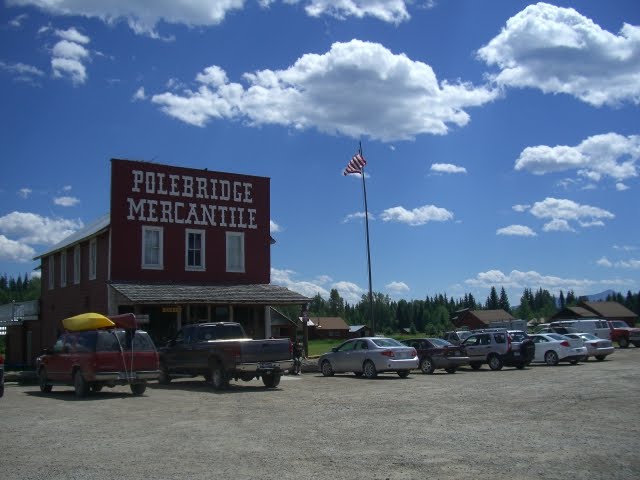
One day in the park wasn't enough so we came back for more. On one of our adventures we took a side road which winds in and out of the park to a little place called Polebridge which is really in the middle of nowhere. It has a restaurant and general store that sells awesome baked goods. They seemed to be doing a pretty good business.
Glacier is a magnificent park and is definitely one of our favorites. Hopefully we'll return one day.
Saturday, July 17, 2010
Wind Energy and an Oil Boom
For lack of a better word, we are 'fascinated' by wind energy. As we travel we see large wind farms in many states. Wind generators are going up all over the country. Every day more electricity is coming to us from the wind. Modern technology is producing wind generators capable of producing more and more energy. Many of the generators top out at between 300 to 400 feet above the ground. The towers go up 300 feet. The fiberglass blades are over 100 feet long. The generator on top of the tower is large enough for men to walk around inside. The largest generators can now produce up to 2.5 mega watts of power - one mega watt can power between 200 to 300 houses.
Of course Brian is always on the lookout for the trucks carrying the various componenets of the wind generators. We see them on the highways all over the country. Special trucks are needed. Some blades are over 100 feet long and require their own trailers. Each 100 foot section of the tower requires its own special trailer. Be aware that a normal big rig semi you might see out on the highway would have a total length of about 65 feet. The wind generatior parts are on a trailer that is about 120 feet long and then maybe another 20 feet for the tractor. The hub the blades attach to requires a special truck. The generator itself requires a special truck. All totaled it can take 17 special trucks to transport one wind generator to the wind farm where it will be put together on a concrete base that takes over 45 mixer truck loads of concrete.
The whole wind energy industry is moving forward by leaps and bounds. We hope this industry lives up to its promise of providing economic efficient electricity to all of the US. If you want to know more about this, here are some links
http://www.awea.org/projects National map of wind farms
http://www.atswes.com/ Trucks that haul wind generators with details and amazing pictures
http://www.gepower.com/businesses/ge_wind_energy/en/index.htm GE wind site, lots of info
http://www.northernpower.com/ Wind generator manufacturer
http://www.youtube.com/watch?v=SOqSP2XTC6o Video on building generator
http://www.desertskywind.com/project.htm A wind farm in Texas
http://www.popsci.com/technology/article/2010-03/next-gen-wind-turbine What a wind generator is made of
http://www.windpoweringamerica.gov/wind_maps.asp Wind in the US
Wednesday, July 7, 2010
Rocky Mountain National Park
It's been at least 10 years since Brian and I have been to Rocky Mountain NP, one of the places we visited frequently when we lived in Colorado. It's as beautiful as ever and was truly delightful to visit again. It's definitely in the top 10 of our favorite parks. One of my most treasured views is of Estes Park when first coming over the hill.
As we entered the park we encountered a large group of elk, a common sight in the area, and a group of Rocky Mountain sheep grazing alongside them. Quite a sight to see.
In spite of some fairly tall snowdrifts Trail Ridge Road was open. We tried to take it all in as we drove up but the majesty of the mountain ranges is overwhelming. I've always said that the sky in Colorado is the most unique shade of blue I've ever seen and it didn't disappoint.
We stopped several times along the way just to let it all sink in, if that's possible. In the picture below I'm holding Tilly back from trying to catch a chipmunk. Not that she'd know what to do with it if she caught one.
Subscribe to:
Posts (Atom)